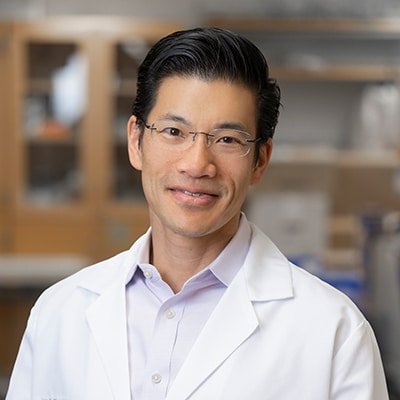
Member Spotlight: Patrick Hanley, Chief & Director, Cellular Therapy Program at Children’s National
“If we change the paradigm of how CGTs are developed and commercialized, I think we’ll see the dam break and access will become widespread.”
In our latest Member Spotlight, we featur e Patrick Hanley, who has seen the cell and gene therapy field grow from a handful of specialised programs into a global clinical reality. As Chief and Director of the Cellular Therapy Program at Children’s National, he and his team lead multiple CGT clinical trials and have helped deliver hundreds of life-saving therapies to patients with limited options.
What’s your affiliation with the cell & gene therapy field?
I’m old enough to have seen the CGT field mature from a handful of programs – we used to call them ivory towers – to more than two hundred treatment centers worldwide offering nearly 50 approved cell and gene therapy products. As a graduate student I worked to translate a research project on cord blood-derived virus-specific T cells into a clinical trial for patients with viral infections post-transplant, and ever since I’ve been fascinated by Good Manufacturing Practices and regulations for CGT and I’ve been a believer in the tremendous potential the field holds for patients. Now I serve as chief and director of the cellular therapy program at Children’s National where we have more than ten ongoing cell and gene therapy clinical trials that we developed at our institution. Over the past 12 years we’ve treated more than 300 patients and manufactured more than 600 products for critically ill patients without other alternatives. I’ve also been involved in co-founding a few companies and have served as an advisor to nearly ten biotech companies.
What is your role within Act for Hope, and what motivated you to get involved?
I am a member of Act for Hope and have served on both the Manufacturing committee and in my current role on the Communication workstream, I was motivated to get involved initially by the promise to help standardize manufacturing and lower the barrier to commercial success, but what really hooked me were some of the conversations we had last year as a group about how to lower the barrier to access for patients and how to include groups like FACT, where I serve on the board of directors, in that discussion.
What is the biggest challenge you currently see in the CGT space?
To me the biggest challenge is that we’ve taken something that works in patients and tried to apply the same pharmaceutical model for delivery to a personalized drug product. I see parallels to Microsoft and computers – in the 1970s most effort was spent further developing massive mainframe computers that were expensive to use and you had to book time. What Microsoft did was come in and take advantage of computers that could be used by everyone in every house by providing software that was easy to use. If we change the paradigm of how CGTs are developed and commercialized, I think we’ll see the dam break and access will become widespread. We’ve seen the first step towards that goal with the recent approval of Waskyra, a gene therapy for Wiscott-Aldrich Syndrome – by the nonprofit Fondazione Telethon. Yes, the first gene therapy for Wiscott-Aldrich is from a non profit who originally raised funds by calling people and asking for donations! This is only one example of a different approach to CGT commercialization and I think the more competition we have the better we will be able to serve patients.